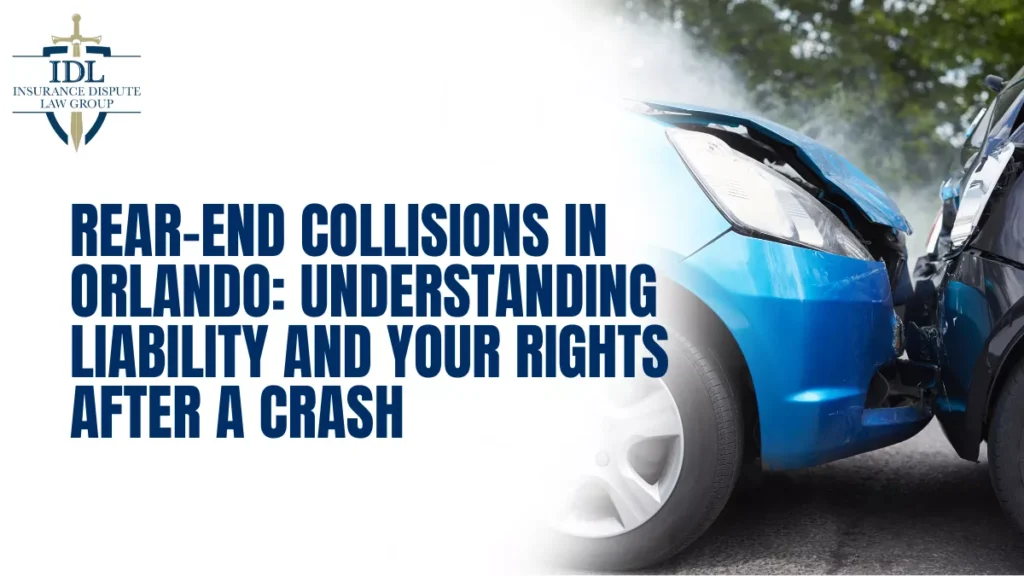
Rear-end collisions are one of the most common types of car accidents in Orlando and throughout Central Florida. These crashes occur when one vehicle strikes the back of another, often at intersections, in heavy traffic, or during sudden stops. While some rear-end accidents may seem minor, many result in serious injuries, costly vehicle damage, and long-term medical complications.
In many cases, rear-end crashes are caused by driver negligence such as distracted driving, speeding, or following too closely. If you were injured in a rear-end accident, you may have the right to pursue compensation for your medical expenses, lost income, and other damages.
At Insurance Dispute Law Group, we help rear-end accident victims across Orlando navigate complex insurance claims and fight for the compensation they deserve. This article explains why rear-end collisions happen, how liability is determined, and what victims should do after a crash.
Complete our free case evaluation form or call us now at 407-573-5402 to protect your rights.
Why Rear-End Collisions Are So Common in Orlando
Orlando’s busy roads, highways, and tourist traffic contribute to a high number of rear-end crashes. Congestion, stop-and-go traffic, and distracted driving make these accidents more likely.
Several factors increase the risk of rear-end accidents:
- Heavy traffic on major highways like I-4
- Drivers following too closely
- Distracted driving from phones or navigation systems
- Sudden braking in congested traffic
- Speeding or aggressive driving
- Poor weather conditions
Even a brief lapse in attention can result in a rear-end collision.
Common Causes of Rear-End Accidents
Most rear-end collisions occur because a driver fails to maintain a safe distance from the vehicle ahead.
Distracted Driving
Drivers who text, check navigation apps, or adjust in-car controls may not notice when traffic slows.
Tailgating
Following too closely leaves little time to react when the vehicle ahead brakes.
Speeding
Drivers traveling too fast may not have enough distance to stop safely.
Sudden Stops
Unexpected braking in heavy traffic can trigger chain-reaction crashes.
Weather Conditions
Rain or reduced visibility can increase stopping distances and accident risk.
Where Rear-End Collisions Often Occur in Orlando
Rear-end crashes frequently occur in areas with heavy traffic or frequent stops.
Common locations include:
- Highway congestion on I-4
- Busy intersections
- Traffic lights and stop signs
- Construction zones
- Parking lot entrances
- Tourist areas with frequent stops
These environments require drivers to remain alert and maintain safe distances.

Who Is Usually at Fault in a Rear-End Accident?
In many cases, the driver who rear-ends another vehicle is presumed to be at fault.
Drivers have a legal responsibility to maintain a safe following distance and be prepared to stop if traffic slows.
However, liability is not always straightforward.
Situations Where the Front Driver May Share Fault
Although the trailing driver is often responsible, there are situations where the front driver may share liability.
Examples include:
- Sudden or unnecessary braking
- Malfunctioning brake lights
- Reversing into another vehicle
- Unsafe lane changes
Each accident must be carefully investigated to determine what actually occurred.
Chain-Reaction Rear-End Accidents
In heavy traffic, rear-end crashes can involve multiple vehicles. These chain-reaction collisions occur when one impact causes a series of subsequent crashes.
Determining liability in these cases may involve several drivers, and fault may be divided among multiple parties.
Insurance companies often dispute responsibility in multi-vehicle accidents.
Common Injuries in Rear-End Collisions
Rear-end accidents often cause injuries even when vehicle damage appears minor.
Common injuries include:
- Whiplash and neck injuries
- Back injuries and herniated discs
- Traumatic brain injuries (TBI)
- Concussions
- Shoulder injuries
- Soft tissue injuries
Some injuries may not appear immediately and can worsen over time.
Delayed Injuries After Rear-End Accidents
Many victims experience symptoms hours or days after the crash.
Delayed symptoms may include:
- Neck stiffness
- Headaches
- Back pain
- Dizziness
- Numbness or tingling
Because symptoms may develop later, seeking medical evaluation immediately after an accident is important.
Florida’s No-Fault Insurance System
Florida follows a no-fault insurance system, meaning drivers must first rely on their own Personal Injury Protection (PIP) coverage for medical expenses and lost wages after an accident.
However, if injuries are serious, victims may pursue additional compensation from the at-fault driver.
Serious injuries may include:
- Permanent injuries
- Significant scarring or disfigurement
- Loss of bodily function
In these cases, victims may seek damages beyond PIP limits.
Compensation Available After a Rear-End Accident
Victims of rear-end collisions may be entitled to compensation for various losses.
Economic Damages
These include financial losses such as:
- Medical expenses
- Hospital bills
- Physical therapy
- Future medical care
- Lost wages
- Loss of earning capacity
- Vehicle repair costs
Non-Economic Damages
These include the personal impact of injuries:
- Pain and suffering
- Emotional distress
- PTSD
- Loss of enjoyment of life
- Permanent disability
Serious injuries often lead to substantial compensation.
How Insurance Companies Try to Reduce Liability
Insurance companies often attempt to minimize claims by arguing:
- The victim stopped suddenly
- The victim exaggerated injuries
- Medical treatment was unnecessary
- Pre-existing conditions caused the injuries
These tactics are frequently used to reduce settlement offers.
Evidence Used to Prove Liability
At Insurance Dispute Law Group, we investigate rear-end collisions using evidence such as:
- Police accident reports
- Vehicle damage analysis
- Traffic camera footage
- Surveillance video
- Witness statements
- Black box vehicle data
- Accident reconstruction analysis
Early investigation helps preserve important evidence.
What to Do After a Rear-End Accident in Orlando
If you are involved in a rear-end crash, taking the right steps can protect your health and your claim.
You should:
- Call 911 and report the accident
- Seek medical attention immediately
- Document the accident scene with photos
- Collect witness information
- Avoid giving recorded statements to insurers
- Contact an experienced accident attorney
These steps can help strengthen your case.
How Insurance Dispute Law Group Helps Rear-End Accident Victims
Rear-end accident claims often involve disputes over injuries and liability.
At Insurance Dispute Law Group, we help victims by:
- Conducting detailed accident investigations
- Identifying liable parties
- Gathering critical evidence
- Negotiating with insurance companies
- Preparing cases for trial when necessary
Our goal is to help accident victims recover the full compensation they deserve.

Injured in a Rear-End Collision in Orlando? We’re Ready to Help
Rear-end accidents may seem straightforward, but insurance companies often fight these claims aggressively. Having experienced legal representation can make a significant difference.
At Insurance Dispute Law Group, we fight for accident victims throughout Orlando and Central Florida.
Take the next step today:
Complete the free case evaluation form
Call us now at 407-573-5402
You focus on recovery — we’ll fight for the compensation you deserve.
Complete our free case evaluation form or call us now at 407-573-5402 to protect your rights.
Sources
1. National Highway Traffic Safety Administration (NHTSA)
Provides research and statistics regarding rear-end collisions and traffic safety.
https://www.nhtsa.gov/
2. Florida Department of Highway Safety and Motor Vehicles (FLHSMV)
Provides traffic crash data and safety information for Florida drivers.
https://www.flhsmv.gov/
3. Insurance Information Institute (III)
Offers resources related to auto accident claims and insurance coverage.
https://www.iii.org/